
Ask any service leader at a brokerage, carrier, or TPA where their team’s work comes from, and the answer is the same: everywhere. A client calls about a certificate. A producer forwards an email with three PDFs attached. A claimant uploads photos through a portal. A carrier underwriter sends a chat asking for an updated schedule. A loss run arrives as a scanned fax that someone saved to a shared drive.
Each of those requests is legitimate work. The problem is that each one lands in a different place, gets captured in a different way, and is tracked — if it’s tracked at all — in a different system. The result is predictable: duplicated effort, requests that slip through the cracks, and customers who call back to ask whether anyone saw their email.
The fix isn’t another channel or another inbox. It’s an operations layer that sits beneath every channel and turns any inbound request into a structured, trackable unit of work.
Why channel sprawl hurts insurance more than most industries
Insurance service is unusually document-dependent and unusually multi-party. A single endorsement request might involve the insured, the agency account manager, the producer, the carrier underwriter, and a premium finance company. Each party uses their preferred channel.
That creates three specific failure modes:
- Context loss. The account manager who took the phone call doesn’t see the email the producer forwarded yesterday. The client explains the same situation twice.
- Invisible queues. Work sitting in personal inboxes doesn’t appear in any workload report. Leaders can’t see backlog until it becomes a complaint.
- Rekeying everywhere. Information arrives as unstructured text, voice, or PDF, and someone has to manually type it into the agency management system, policy admin system, or claims platform.
None of these is solved by adding a chatbot to the website.
What an operations layer actually does
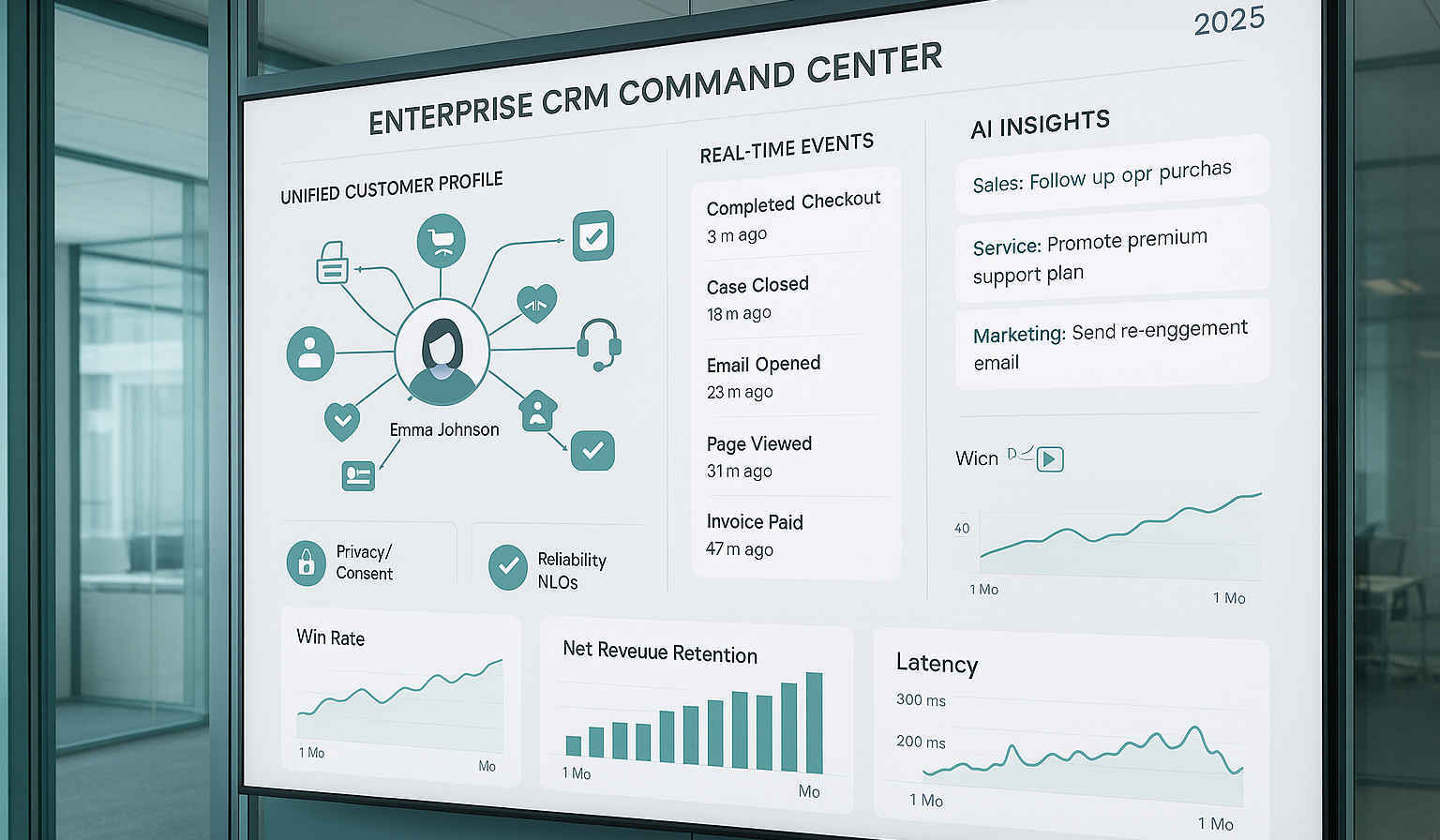
Think of the operations layer as a common intake and orchestration fabric. Regardless of where a request starts, it does five things.
1. Capture
Every channel feeds the same intake: email inboxes, phone transcripts, chat sessions, web forms, portal uploads, and even scanned documents. Nothing depends on someone remembering to log it.
2. Understand
AI classifies the request (certificate, endorsement, claim status, billing question, new submission), identifies the account and policy, and extracts the relevant details from text and attachments. A PDF schedule becomes structured rows. A voicemail becomes a summarized request with an identified policy number.
3. Structure
The request becomes a work item with a type, priority, owner, due date, and linked documents — the same shape regardless of which channel it came from. This is the step that makes work visible and measurable.
4. Route and act
Simple items are resolved automatically or with one-click approval: a standard certificate issued, a status update sent, a document acknowledged. Complex items go to the right person with everything already assembled.
5. Close the loop
The requester gets a response through the channel they used, and the system of record — the agency management system, PAS, or claims system — is updated through APIs rather than rekeying.
Where to start: the high-volume, low-judgment requests
Don’t try to automate everything at once. Look for requests that are frequent, follow predictable rules, and frustrate customers when they’re slow.
For brokers and agencies:
- Certificate of insurance requests
- Policy document and ID card requests
- Simple endorsements (address changes, vehicle adds, additional insureds)
- Renewal information gathering
For carriers:
- Broker status inquiries on submissions and endorsements
- Billing and payment questions
- Document requests for policyholders
For TPAs and claims operations:
- Claim status inquiries
- Document submission acknowledgments
- Invoice receipt and initial review
Illustrative example: an agency team handling 2,000 service requests a month across email, phone, and portal might find that roughly a third are certificate and document requests that follow standard rules. Capturing and resolving those through one layer frees account managers to spend time on coverage conversations and renewals instead of document retrieval.
Design principles that matter
Channel-agnostic, not channel-blind
The layer should treat every request the same way internally, while remembering how the customer reached out so it can respond in kind. A client who called shouldn’t receive a portal notification they’ll never see.
Humans approve anything that changes coverage
Issuing a standard certificate from existing policy data is low risk. Adding an additional insured with specific wording may need review. Endorsements that change coverage, limits, or premium should always pass through a licensed person. Build those rules in explicitly.
Evidence travels with the work
Every extracted value should link back to its source — the email line, the page of the PDF, the moment in the call transcript. Reviewers verify in seconds, and auditors can trace any change.
Integrate, don’t replicate
The operations layer shouldn’t become another system of record. It reads from and writes to the agency management system, policy admin, and claims systems through APIs. Data lives where it belongs.
Measuring whether it’s working
Track a small set of metrics, consistently across channels:
- Time to first response by request type
- Time to resolution by request type
- Touches per request — how many people handled it
- Repeat contacts — customers following up on the same issue
- Automation rate — share of requests resolved without manual handling
- Backlog age — the oldest open items, visible to leaders daily
Repeat contacts are often the most revealing measure. When they fall, it’s a sign customers trust that their request was received and is moving.
What changes for the team
The biggest shift isn’t technological. Account managers and service staff stop being human routers — copying information between systems and searching inboxes — and start being problem solvers for the requests that actually need judgment. Leaders get a real-time view of workload instead of anecdotes. And customers get an experience that feels coordinated, even though the work behind it still spans many people and systems.
Insurance will always be multi-channel and multi-party. Operations don’t have to be.
Map your service channels to one workflow. Book an Aketud Insurance AI Workflow Review and we’ll walk through your current intake channels, identify the highest-volume requests to automate first, and outline how they connect to your existing systems.