
In many insurance operations, compliance feels like a tax on getting work done. Underwriters wait for referral sign-offs. Claims handlers fill in checklists after the fact. Quality teams sample a handful of files each month, find issues weeks after they happened, and send them back for remediation. When a regulator or capacity provider asks for evidence, people spend days reconstructing what happened from emails and notes.
The irony is that this approach is slow and weak. Controls that run after the work is done catch problems late, catch only the ones in the sample, and leave thin evidence behind.
There’s a better design: build the controls into the workflow itself. When a check runs at the moment a decision is made, using the data already in front of the system, it adds seconds rather than days, and it leaves evidence behind automatically. This post explains how to get there.
Where compliance drag comes from
Most operational drag comes from four patterns:
- Detective instead of preventive. Problems are found after the fact through sampling and audits, when fixing them is expensive.
- Uniform review. Every case gets the same level of review regardless of risk, so simple work waits behind complex work.
- Manual evidence. People document what they did separately from doing it, so evidence is incomplete and inconsistent.
- Controls nobody owns. Checks accumulate over the years, overlap with each other, and outlive the reasons they were introduced.
Principle 1: Translate obligations into specific checks
Start with an inventory of the obligations that apply to the workflow. For claims and underwriting, these typically include:
- Claims handling timelines: acknowledging claims, requesting information, and communicating decisions within the periods set by regulation, contract, or internal standards.
- Licensing and authority: ensuring the person or entity making a decision is licensed and authorized for that line, territory, and amount.
- Delegated authority limits: for MGAs and coverholders, keeping binding and claims settlement within the limits granted by capacity providers.
- Sanctions and watchlist screening on insureds, claimants, and payees before binding or payment.
- Privacy and consent: handling personal, health, and financial information in line with consent and data-protection obligations.
- Fair treatment and complaints: recognizing complaints and vulnerable customers, and handling them through the right process.
- Record keeping: retaining the right records for the right period.
Then turn each obligation into a concrete, testable check. “Claims must be handled promptly” can’t be automated. “Send an acknowledgment within the required period for this jurisdiction, and alert the handler before the deadline if none has been sent” can.
Principle 2: Prevent where you can, detect where you must
For each check, decide where in the workflow it should run:
- Preventive checks stop a non-compliant action before it happens. A payment to a sanctioned party is blocked. A quote above an underwriter’s authority can’t be issued without the right approval. A certificate can’t show coverage the policy doesn’t have.
- Guiding checks warn the user without stopping them. A deadline approaches, a required document is missing, a note looks incomplete.
- Detective checks look for patterns across many cases after the fact, such as unusual settlement patterns, recurring timeline breaches by one team, or drift in AI-assisted recommendations.
The more you can move from detective to preventive and guiding, the less remediation work you create.
Principle 3: Tier review by risk
Not every case needs the same scrutiny. Define risk tiers using factors you can calculate in the workflow, such as amount, complexity, customer vulnerability, exceptions to guidelines, AI confidence, and fraud indicators.
- Low-risk, rules-compliant work moves straight through with automated checks only.
- Medium-risk work gets a single review, with the reviewer shown exactly why it was flagged.
- High-risk work gets senior or dual review, and the evidence is assembled before it reaches the reviewer.
Risk tiering is what makes in-workflow compliance faster than the old model. Review effort goes where risk actually is, instead of being spread thinly across everything.
Principle 4: Capture evidence as a by-product
Every check that runs in the workflow should leave a record behind automatically: what was checked, against which data and rule version, the result, and who acted on it. Every human review should record the reviewer, the decision, and the reason.
When a regulator, auditor, or capacity provider asks how a decision was made, the answer becomes a report instead of a research project. And because evidence is captured consistently, it can be analyzed, which feeds back into better controls.
Principle 5: Give every control an owner and a review date
Controls should be treated like any other operational asset. Each one needs an owner, a documented purpose (which obligation it serves), and a periodic review. Retire controls that no longer serve a purpose, consolidate duplicates, and adjust thresholds based on what the evidence shows. A control library that only grows will eventually recreate the drag you were trying to remove.
How AI fits, and how AI itself is controlled
AI helps in-workflow compliance in several practical ways: reading documents to check whether required information is present, recognizing complaints or signs of vulnerability in correspondence, matching names against watchlists with fuzzy logic, summarizing evidence for reviewers, and spotting patterns across thousands of cases that sampling would miss.
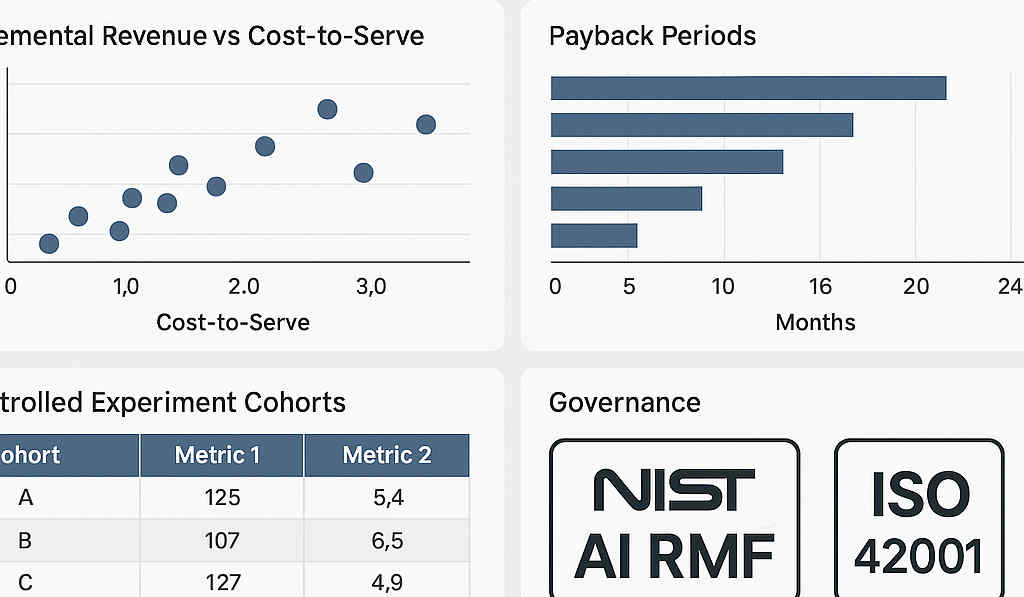
AI-assisted steps need controls of their own. Record the model version and inputs behind each recommendation, set confidence thresholds below which work routes to a person, monitor outcomes for drift and unfair patterns, and make sure a human remains accountable for consequential decisions. Frameworks such as the NIST AI Risk Management Framework and ISO/IEC 42001 provide useful structure for this.
Illustrative example: an MGA writing on delegated authority might build its binding limits, sanctions screening, and referral rules directly into the quote workflow. Underwriters stop waiting for manual sign-off on routine risks, referrals arrive with the evidence already assembled, and the monthly report to the capacity provider is generated from the control log rather than compiled by hand.
Measuring whether it’s working
- Compliance exceptions caught preventively versus found after the fact
- Timeline breaches, such as late acknowledgments or late decisions
- Average review wait time by risk tier
- Share of work flowing straight through with automated checks only
- Time to answer an audit or regulator request
- Audit findings over successive periods
Compliance as part of the flow
The best compliance controls are the ones nobody notices until they matter. They run quietly in the workflow, stop the actions that should be stopped, route the cases that deserve a closer look, and leave a clear trail behind. That’s not a trade-off between compliance and productivity. Done well, it delivers both.
Check whether your controls help or hinder the work. Download the Aketud AI Governance Checklist to review your claims and underwriting controls, including AI-assisted steps, and identify where in-workflow checks can replace after-the-fact review.